Harbour Place Dental

For that Perfect Winning Smile


Call us: (425) 493-8111

  • Home
  • About Us
  • Services
    • Preventive and Diagnostic
    • Restorative and Cosmetic
  • Contact Us
  • Appointments
  • Patient Forms
  • Financing
  • Patient Reviews
    • Add Your Review Here
  • Specials
  • Blog
    • Cosmetic Dentistry
      • Teeth Whitening
  • Locations Served
    • Whidbey Island Dentists | Harbour Place Dental|(425) 493-8111
    • Dentist Everett WA Area
    • Dentist Mill Creek WA Area
    • Bothell Dentist
    • Lynnwood Dentist
    • Dentists Edmonds WA
    • Lake Stevens Dentists
    • Snohomish Dentist | Harbour Place Dental
  • Feedback Request
  • Reopening Update
  • Online Patient Registration
  • Office Parties

Can Adults Straighten Their Teeth?

September 24, 2026 By HarbourPLaceDental

The Truth About Orthodontics at Any Age
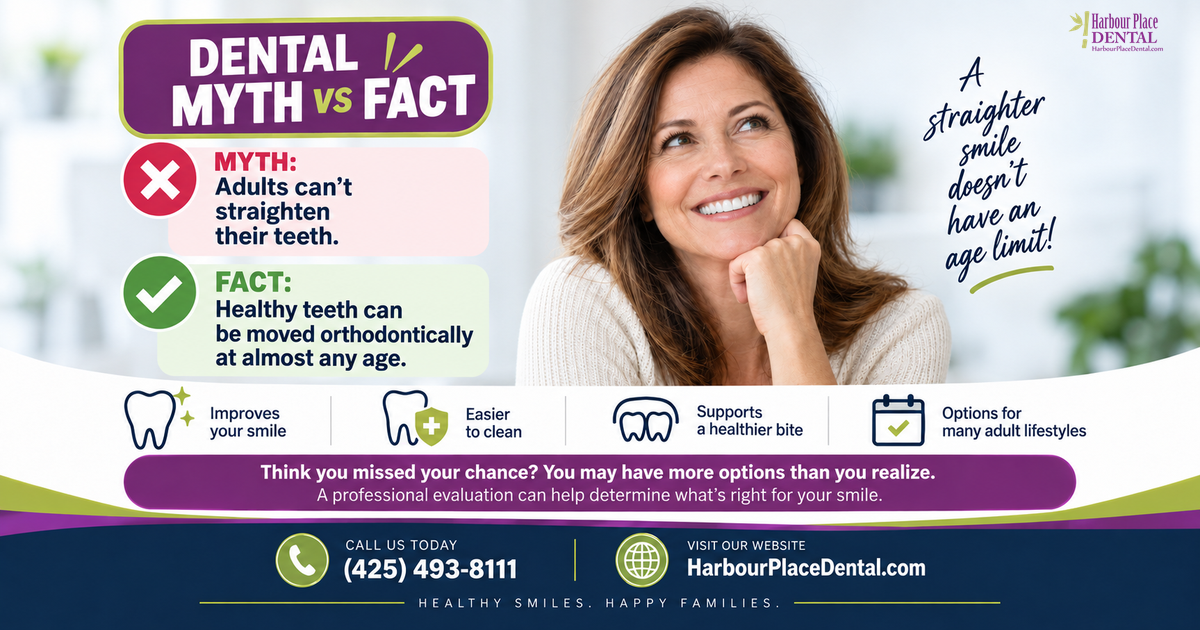
Many people still picture braces as something that belongs to the teenage years. If you did not straighten your teeth when you were younger, it can be easy to assume that the opportunity has passed. That belief is one of the most persistent orthodontic myths.

The reality is much more encouraging: healthy teeth can be moved orthodontically at almost any age. Adults may be candidates for braces, clear braces, professionally supervised clear aligners, or other treatment approaches depending on their individual needs.

The key issue is not simply your age. It is the health of your teeth, gums, supporting bone, and the type of bite or alignment problem that needs to be corrected.

Why Adults Consider Orthodontic Treatment

Adults seek orthodontic care for many reasons. Some want to improve the appearance of a smile that has bothered them for years. Others notice that teeth have shifted with time. Some have crowded teeth that are difficult to keep clean, while others have bite problems that affect chewing or contribute to uneven wear.

Orthodontic treatment is designed to move teeth into better positions and improve the way the upper and lower teeth meet. The American Dental Association notes that orthodontics can be used to correct crowded teeth, spacing problems, protruding teeth, and teeth that do not meet properly.

For adults, that means treatment may provide cosmetic benefits, but the conversation is not only about appearance. Better alignment can sometimes make brushing and flossing easier. Correcting certain bite problems may also help improve chewing and reduce abnormal wear on teeth.

Are Adults Really Too Old for Braces?

No. Age by itself does not automatically prevent orthodontic treatment.

The American Dental Association states that healthy teeth can be treated orthodontically at any age. The American Association of Orthodontists also emphasizes that adults can successfully receive orthodontic treatment and that age is rarely the deciding factor.

That does not mean every adult is automatically a candidate for every type of treatment. Adults often have a more complex dental history than teenagers. They may have crowns, fillings, missing teeth, dental implants, previous gum disease, or areas of bone loss. These factors do not necessarily rule out orthodontic care, but they can affect how treatment should be planned.

That is why the first step should be a careful professional evaluation rather than a do-it-yourself approach or an assumption based only on age.

What Treatment Options Are Available for Adults?

Traditional braces remain an effective option for many adults. Brackets are attached to the teeth and connected by wires that apply controlled pressure to gradually move teeth into new positions.

Some adults may prefer clear or tooth-colored braces that are less noticeable. Others may be candidates for clear aligners. These removable trays are designed to move teeth gradually and can be appealing to people who want a more discreet option.

Clear aligners are not the right choice for every orthodontic problem. The best treatment depends on the diagnosis, the complexity of the tooth movement required, and the health of the teeth and gums. A dentist or orthodontist can determine whether braces, aligners, or another approach is most appropriate.

Why Gum Health Matters

Healthy gums are especially important before orthodontic treatment begins.

Orthodontic appliances move teeth by applying pressure that causes changes in the bone and tissues surrounding the teeth. If significant gum disease is present, moving teeth without first addressing that disease can increase the risk of complications.

The American Association of Orthodontists advises that periodontal health should be evaluated before treatment. Adults with a history of gum disease may still be able to have orthodontic care, but treatment may require coordination between the orthodontist, general dentist, and sometimes a periodontist.

This is another reason professional supervision matters. An attractive smile is important, but treatment should also protect the long-term health of the gums, roots, and supporting bone.

What About Crowns, Fillings, or Missing Teeth?

Many adults have existing dental work, and that does not automatically eliminate orthodontic treatment.

Teeth with crowns can often be moved. Fillings are common and may simply need to be considered during planning. Missing teeth may sometimes create spaces that orthodontic treatment can help manage as part of a broader restorative plan.

In more complex cases, orthodontics may be coordinated with restorative dentistry. For example, teeth may be moved to create the right amount of space before a replacement tooth is placed. Every case is different, which is why an individualized treatment plan is important.

Can Straightening Teeth Improve Oral Hygiene?

It can in some cases.

Crowded or overlapping teeth may create areas that are difficult to reach with a toothbrush or floss. Improving alignment may make those areas easier to clean. That does not mean orthodontic treatment replaces good home care. In fact, brushing and flossing become especially important while wearing braces or aligners.

Patients with braces need to clean carefully around brackets and wires. People using removable aligners need to keep both their teeth and aligners clean and follow instructions about when to remove and replace the trays.

Orthodontic treatment works best when it is paired with consistent preventive care and regular dental visits.

Does Adult Treatment Take Longer?

Treatment time varies from person to person. Age can influence some biological factors, but it is only one part of the picture.

The severity of the alignment problem, the type of movement required, gum and bone health, the appliance being used, and how closely the patient follows instructions can all affect treatment time.

For aligner patients, wearing the trays for the prescribed amount of time is essential. For patients with braces, keeping appointments and following instructions about elastics or other appliances can make a meaningful difference.

Rather than comparing your timeline with someone else’s, it is better to ask what is realistic for your own case.

What Happens After Teeth Are Straightened?

Orthodontic treatment does not end the moment braces come off or the final aligner is completed.

Teeth can shift over time, so retainers are an important part of protecting the result. Your orthodontic provider will recommend a retention plan based on your treatment and risk of relapse.

Wearing a retainer as directed can help maintain the new position of your teeth. Skipping retention can allow teeth to gradually move again, even after successful treatment.

This is true for teenagers and adults alike.

A Straighter Smile Is Not Limited by Age

The myth that adults cannot straighten their teeth can prevent people from even asking about treatment. But modern orthodontic care is not reserved for teenagers.

If your teeth and gums are healthy enough for treatment, there may be several ways to improve alignment. The right option depends on your bite, dental history, goals, and oral health.

For some adults, treatment is mainly about confidence. For others, it may also make daily cleaning easier or improve the way the teeth come together. In either case, the safest starting point is a professional evaluation.

If you have been thinking, “I am too old for braces,” consider replacing that question with a better one:

“What orthodontic options are appropriate for my teeth today?”

That question opens the door to a personalized discussion based on your actual oral health rather than an outdated myth.

Harbour Place Dental can help you evaluate your smile, discuss your concerns, and determine whether an orthodontic consultation may be appropriate.

📞 (425) 493-8111
🌐 HarbourPlaceDental.com
Filed Under: Blog, Cosmetic Dentistry, Restoration Dentistry

Common Reasons for a Toothache: What You Need to Know

April 22, 2025 By HarbourPLaceDental

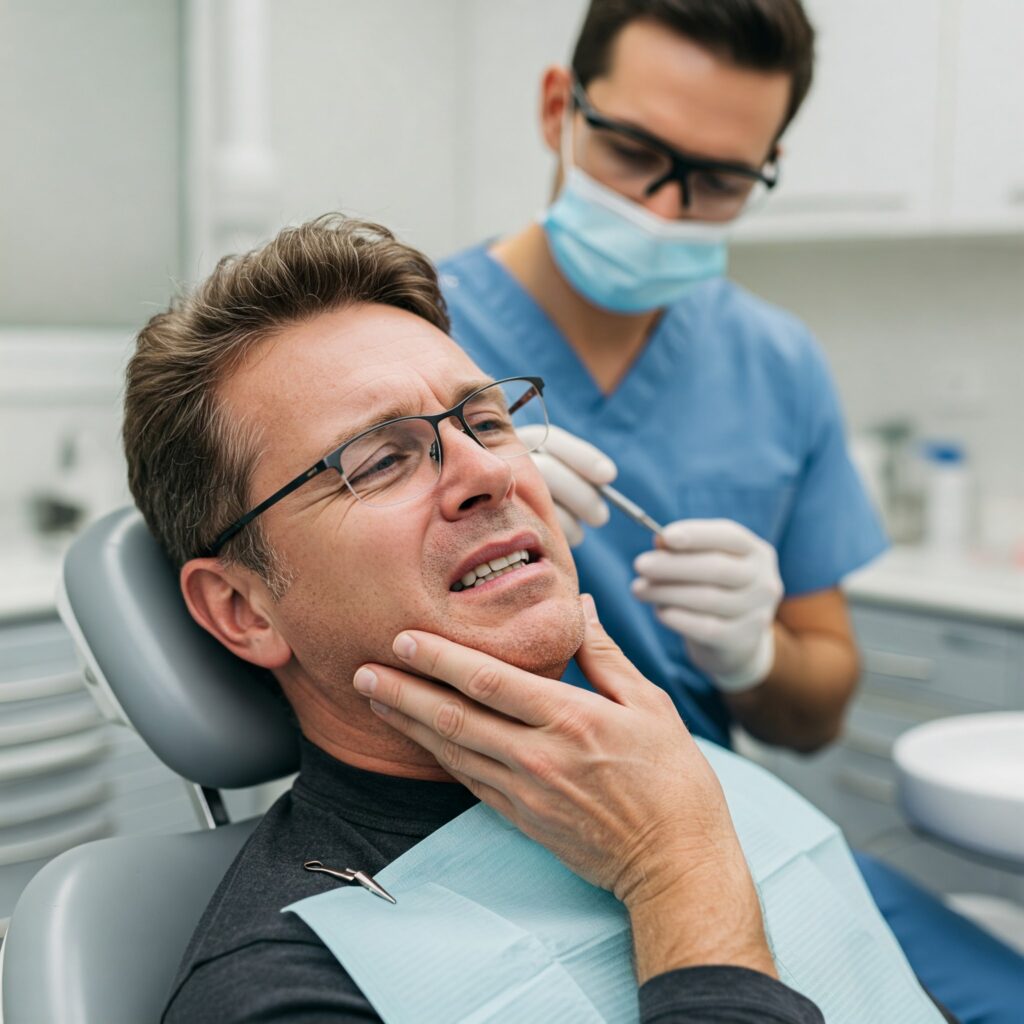
A man in a dental chair clutches his jaw with a pained expression while a masked dentist in the background holds a dental tool.

A toothache can strike any time, often with sharp, throbbing, or persistent pain that’s difficult to ignore. While it’s easy to reach for a pain reliever or try a quick home remedy, it’s essential to understand why your tooth is hurting in the first place. Toothaches are symptoms of underlying issues that require attention, sometimes immediate, from a dental professional.

In this article, we’ll explore the most common causes of toothaches, how to recognize them, and what treatment options are available. Understanding the root cause of your dental pain can empower you to make informed decisions about your oral health.

1. Tooth Decay (Cavities)

Tooth decay is the leading cause of toothaches. It occurs when plaque, a sticky film of bacteria, breaks down sugar into acids that erode tooth enamel.

Over time, decay can penetrate through the enamel and into the dentin, the softer layer beneath. The pain becomes more intense and persistent once it reaches the pulp (the tooth’s nerve center).

Signs:

  • Sensitivity to hot, cold, or sweets
  • Pain when biting down
  • Visible holes or pits in the teeth

Treatment:

  • Fillings for minor cavities
  • Root canals are necessary if decay reaches the pulp
  • Crowns for extensive damage

Source: American Dental Association (ADA) – Tooth Decay


2. Gum Disease (Periodontal Disease)

Gum disease, particularly in its advanced stages, can cause toothaches due to inflammation, infection, or even bone loss around the teeth.

In gingivitis (early stage), gums become red and swollen. If untreated, it can progress to periodontitis, where the supporting structures of teeth begin to break down.

Signs:

  • Bleeding gums
  • Gum recession
  • Loose teeth
  • Persistent bad breath

Treatment:

  • Professional cleaning (scaling and root planing)
  • Improved oral hygiene
  • Antibiotics or surgery for severe cases

Source: Centers for Disease Control and Prevention (CDC) – Periodontal Disease


3. Tooth Abscess

A dental abscess is a pocket of pus caused by a bacterial infection, usually resulting from untreated decay, gum disease, or trauma. The pain from an abscess is often severe and can spread to the jaw, neck, or ear.

Signs:

  • Severe, throbbing pain
  • Swelling in the face or cheek
  • Fever
  • Foul-tasting discharge

Treatment:

  • Draining the abscess
  • Root canal therapy
  • Tooth extraction in severe cases
  • Antibiotics to treat the infection

Source: Mayo Clinic – Tooth Abscess


4. Cracked or Fractured Tooth

Cracks in teeth can result from chewing hard foods, trauma, or even teeth grinding (bruxism). While some cracks are visible, others may be microscopic but still cause significant discomfort, especially when chewing or exposing the tooth to temperature extremes.

Signs:

  • Pain when biting or chewing
  • Intermittent pain
  • Sensitivity to hot and cold
  • Difficulty locating the source of the pain

Treatment:

  • Dental bonding
  • Crowns
  • Root canal if the pulp is affected
  • Extraction in cases of severe fracture

Source: American Association of Endodontists (AAE) – Cracked Teeth


5. Impacted Wisdom Teeth

Wisdom teeth often don’t have enough room to erupt correctly, leading to impaction. This can result in pain, swelling, and pressure on adjacent teeth.

Signs:

  • Jaw or gum pain at the back of the mouth
  • Swollen or tender gums
  • Difficulty opening the mouth
  • Headaches or earaches

Treatment:

  • Extraction of the impacted tooth
  • Pain management during recovery

Source: Cleveland Clinic – Impacted Wisdom Teeth


6. Teeth Grinding (Bruxism)

Grinding or clenching your teeth—especially at night—can wear down enamel and lead to tooth sensitivity, jaw pain, and even cracked teeth.

Signs:

  • Dull, persistent tooth pain
  • Headaches
  • Facial soreness
  • Flattened or chipped teeth

Treatment:

  • Nightguards or mouthguards
  • Stress management
  • Dental correction in cases of bite misalignment

Source: National Institutes of Health (NIH) – Bruxism


7. Sinus Infections

Surprisingly, not all toothaches originate from the teeth. A sinus infection can cause referred pain in the upper back teeth due to the proximity of the sinus cavities to the roots.

Signs:

  • Pressure or pain in the upper molars
  • Nasal congestion
  • Facial pressure or headache
  • Fever or fatigue

Treatment:

  • Decongestants or antihistamines
  • Antibiotics if bacterial
  • Sinus rinse or steam inhalation

Source: American Academy of Otolaryngology – Sinusitis


8. Dental Eruption in Children or Wisdom Tooth Eruption in Adults

In children, eruption pain is common when teeth break through the gums. In adults, this can happen with wisdom teeth.

Signs:

  • Localized gum tenderness
  • Mild fever in children
  • Red or swollen gum tissue
  • Refusal to eat or irritability in toddlers

Treatment:

  • Teething rings or cold compresses for infants
  • Monitoring and possible extraction of wisdom teeth

Source: American Academy of Pediatrics – Teething


9. Poor Oral Hygiene

Inadequate brushing and flossing habits allow plaque and bacteria to accumulate, increasing the risk of cavities, gum disease, and infections—all of which can lead to toothaches.

Signs:

  • Sticky or fuzzy feeling on teeth
  • Plaque or tartar buildup
  • Persistent bad breath
  • Increasing tooth sensitivity

Treatment:

  • Routine dental cleanings
  • Proper brushing and flossing techniques
  • Fluoride treatments

Source: World Health Organization (WHO) – Oral Health


10. Dental Procedures or Fillings

Sometimes, dental work itself can cause temporary discomfort. Newly placed fillings or crowns may cause sensitivity, or the bite may be slightly off, leading to pain when chewing.

Signs:

  • Pain when biting
  • Cold sensitivity after dental work
  • Dull ache near treated tooth

Treatment:

  • Bite adjustment by the dentist
  • Desensitizing toothpaste
  • Follow-up appointment if pain persists

Source: Colgate Oral Care Center – Tooth Pain After Filling


When to See a Dentist

You should seek professional help if:

  • Pain lasts more than 1–2 days
  • You experience swelling, fever, or discharge
  • You have difficulty chewing or opening your mouth
  • The pain is severe or spreading

Dental issues rarely resolve themselves. Early intervention not only relieves pain but also prevents further complications, such as abscesses or tooth loss.


Final Thoughts

A toothache is never just a nuisance—it’s your body signaling something’s wrong. Whether it’s decay, infection, trauma, or even a sinus issue, identifying the cause is the first step toward effective treatment.

If you’re experiencing dental pain, don’t wait it out. Schedule an appointment with your dentist for a comprehensive evaluation. With modern dental technology and treatment options, relief is closer than you think—and so is the path to a healthier smile.


References

  1. American Dental Association. “Tooth Decay.” MouthHealthy. https://www.mouthhealthy.org/all-topics-a-z/tooth-decay
  2. Centers for Disease Control and Prevention. “Periodontal Disease.” https://www.cdc.gov/oralhealth/conditions/periodontal-disease.html
  3. Mayo Clinic. “Tooth Abscess.” https://www.mayoclinic.org/diseases-conditions/tooth-abscess/symptoms-causes/syc-20350901
  4. American Association of Endodontists. “Cracked Teeth.” https://www.aae.org/patients/dental-symptoms/cracked-teeth/
  5. Cleveland Clinic. “Impacted Wisdom Teeth.” https://my.clevelandclinic.org/health/diseases/23158-impacted-tooth
  6. National Institutes of Health. “Bruxism.” https://www.ncbi.nlm.nih.gov/books/NBK534847/
  7. American Academy of Otolaryngology. “Sinusitis.” https://www.enthealth.org/conditions/sinusitis/
  8. American Academy of Pediatrics. “Teething.” https://www.healthychildren.org/English/ages-stages/baby/teething-tooth-care/Pages/default.aspx
  9. World Health Organization. “Oral Health.” https://www.who.int/news-room/fact-sheets/detail/oral-health
  10. Colgate Oral Care Center. “Tooth Pain After Filling.” https://www.colgate.com/en-us/oral-health/dental-visits/tooth-pain-after-filling-what-you-need-to-know-1013

Filed Under: Blog, Preventive Dentistry Tagged With: causes of tooth pain, Cavities, cracked tooth, dental abscess, Mukilteo Dentist, tooth decay, toothache near me, toothache remedies

A Healthy Mouth for a Healthy Life: The Link Between Oral Health and Overall Wellness

May 14, 2024 By HarbourPLaceDental

Key Takeaways

  • Your mouth mirrors your body’s health – issues with your oral health can indicate and even lead to systemic health problems.
  • Oral health impacts daily functions like speaking, eating, and social interactions, influencing overall quality of life.
  • Good oral hygiene can prevent diseases, enhance self-confidence, and reduce healthcare costs.
  • A balanced diet, regular dental check-ups, and proper oral care routines are essential for a healthy mouth and body.
  • Oral health should be a priority, not an afterthought, in pursuing a healthier, happier life.

A Healthy Mouth for a Healthy Life: The Link Between Oral Health and Overall Wellness

Oral Health and Overall health connection
Oral Health and General Well-being: Exploring the Link, Impact and Benefits

When we think about staying healthy, we often focus on hitting the gym or eating a balanced diet. But there’s a key player in the game of health that doesn’t always get the attention it deserves: our oral health. Your mouth is more than just a set of pearly whites; it’s the gateway to your overall well-being. And here’s something to chew on: problems in your mouth can affect the rest of your body, making oral health a critical piece of the health puzzle.

Smiling Wide: Oral Health as a Reflection of Your Body’s Health

Have you ever heard the saying, ‘Your eyes are the window to your soul’? Well, consider your mouth the window to your body’s health. It’s not just about avoiding cavities or a shiny smile; your oral health can reveal a lot about what’s going on inside your body. Conditions like gum disease, for example, are linked to a host of issues, including heart disease, diabetes, and respiratory disease.

Therefore, keeping your mouth clean and healthy is more than cosmetic—it’s vital to keeping your whole body healthy. When your mouth is healthy, chances are your overall health is good, too.

From Bite to Brain: How Dental Well-being Influences Overall Vitality

Our oral health can surprisingly impact our mental and physical vitality. Think about it: a toothache can turn your whole world upside down, and chronic oral health issues can lead to more serious health problems. It’s a two-way street: not only can problems in your body affect your oral health, but issues in your mouth can also affect the rest of your body.

This is because your mouth is teeming with bacteria — mostly harmless. However, without proper oral hygiene, bacteria can reach levels that might lead to oral infections, such as tooth decay and gum disease. Moreover, certain medications — such as decongestants, antihistamines, painkillers, diuretics, and antidepressants — can reduce saliva flow. Saliva washes away food and neutralizes acids produced by bacteria in the mouth, helping to protect you from microbial invasion or overgrowth that might lead to disease.

Mind Your Mouth: Understanding the Oral-Systemic Connection

The idea that the health of your mouth is connected to the health of the rest of your body isn’t new. It dates back to Hippocrates. This connection is often called the ‘oral-systemic link,’ a hot topic in dentistry and medicine. The mouth is filled with countless bacteria, and this is perfectly normal. But when these bacteria get out of balance due to poor dental hygiene, smoking, or certain diseases, they can cause infections like gum disease. And that’s where the problems begin.

The Mouth-Body Relationship: More Than Just Teeth and Gums

When we talk about oral health, it’s not just teeth we’re referring to. Your gums, tongue, and the inside of your mouth all play roles in your oral health. And these parts of your mouth can give clues about other health issues. For instance, pale gums can indicate anemia, and ulcers might indicate a vitamin deficiency. So, paying attention to what’s happening in your mouth is essential because it could be telling you something important about your overall health.

Dental Red Flags: When Your Mouth Warns You About Health Issues

Your mouth can wave several ‘red flags,’ signaling that something’s not right. Bleeding gums can be a sign of gum disease, which can lead to more serious health issues like stroke, heart disease, and diabetes. Bad breath might be more than an embarrassing social problem; it could indicate dry mouth, infections, or other issues. So, if you notice something off in your oral health, don’t just brush it off. It might be the first sign of something more serious.

Chew on This: The Impact of Oral Health on Daily Life

It’s not just about avoiding discomfort or the dentist’s drill; the state of your mouth can affect your ability to do the most basic human activities. Poor oral health can make it difficult to chew and digest food properly, affecting nutrition and overall health. Tooth loss and gum pain can also affect speech and your communication ability. Oral health is deeply intertwined with our day-to-day living.

Speak, Eat, Smile: The Role of Oral Health in Quality of Life

Imagine not being able to enjoy your favorite foods or feeling self-conscious every time you laugh or speak. That’s the reality for many people with poor oral health. Healthy teeth and gums are essential for a good quality of life. They allow us to speak, enjoy various foods, and show our emotions through smiles and expressions. When oral health suffers, it can dampen these simple joys and significantly impact our well-being.

The Emotional Weight of Oral Health: Confidence and Social Interactions

There’s also an emotional aspect to consider. Your smile is one of the first things people notice about you. Being embarrassed about your teeth can affect your self-esteem and how you interact with others. Social interactions can become stressful, and you might avoid close contact or speaking up, which can lead to feelings of isolation or depression. A healthy mouth can boost your confidence and help you feel more comfortable in your skin.

The Perks of Polishing: Top Benefits of a Pristine Smile

Keeping your mouth clean and healthy has numerous benefits. For starters, it can help prevent bad breath, which is not just a social turn-off but also a symptom of underlying health issues. Regular brushing and flossing can also keep tooth decay and gum disease at bay, preserving your natural teeth for as long as possible and preventing the need for extensive dental work down the line.

Preventive Power: How Good Oral Hygiene Can Save You from Illness

Good oral hygiene doesn’t just save your smile; it could save your life. By brushing, flossing, and visiting the dentist regularly, you’re taking critical steps to prevent the spread of bacteria that can cause systemic diseases. Research has shown that gum disease is linked to heart disease, stroke, and diabetes. By caring for your mouth, you’re not just avoiding cavities; you’re taking a stand against serious health conditions.

The Financial Smile: How Oral Health Reduces Healthcare Costs

Investing in your oral health can also save you money. Preventive dental care is far more affordable than treating conditions that have been allowed to progress due to neglect. By maintaining good oral hygiene and visiting the dentist for regular check-ups, you can avoid costly procedures and the associated time off work or school, not to mention the potential costs of treating related systemic health issues.

Flash Those Pearly Whites: How to Champion Your Oral Health

So, how do you ensure your mouth stays healthy? It’s not as complicated as it might seem. Consistent daily care, smart dietary choices, and regular dental visits are the cornerstones of good oral health. It’s about creating habits that support a clean and healthy mouth, which supports a healthy body.

Brush Up Your Routine: Daily Practices for Optimal Oral Health

You need to Brush your teeth at least twice a day with fluoride toothpaste, floss daily to remove plaque from places your brush can’t reach, and rinse with an antimicrobial mouthwash to kill bacteria. Remember to replace your toothbrush every three to four months or sooner if the bristles are frayed. A worn toothbrush won’t do a good job of cleaning your teeth.

Food for Thought: Nutrition’s Role in a Radiant Smile

What you eat matters, too. A diet rich in fruits, vegetables, lean proteins, and whole grains can provide the nutrients necessary for optimal oral health. Limit sugary snacks and acidic drinks that can erode tooth enamel and lead to decay. And don’t forget about water – staying hydrated helps produce saliva, which is essential for oral health.

Remember, your mouth is a key player in your overall health game. By taking care of it, you’re not just ensuring a great smile but taking a big step towards a healthier life. So brush up on those oral hygiene habits, make smart food choices, and don’t skip those dental appointments. Your body (and your wallet) will thank you.

A Final Nod to Nodules: Recognizing the Significance of Oral Health

As we wrap up, let’s give a final nod to the importance of oral health. It’s not just about fresh breath and avoiding cavities; it’s about recognizing our mouth’s role in our overall health. From being the starting point of digestion to affecting our confidence and social interactions, a healthy mouth is integral to a healthy life.

Frequently Asked Questions

Can Poor Oral Health Affect More Than Just My Teeth?

Absolutely. Poor oral health can lead to a range of health issues beyond your mouth, including heart disease, stroke, diabetes, and even complications during pregnancy.

What Are the Most Common Oral Health Issues That Impact Overall Health?

Gum disease and tooth decay are the most common issues. Both can lead to pain and tooth loss and can affect overall health.

How Often Should I Visit the Dentist for a Healthy Smile?

Most people should see the dentist for a check-up and cleaning at least twice a year. However, if they have certain health issues, their dentist might recommend more frequent visits.

Can Brushing and Flossing Make a Difference in My General Well-being?

Yes, they can. Brushing and flossing remove plaque, a sticky film of bacteria that can cause gum disease and tooth decay, which are linked to other health problems.

What are the top recommended oral health products for Maintaining a healthy mouth?

Look for toothpaste with fluoride, a soft-bristled toothbrush, floss or interdental cleaners, and an antimicrobial mouthwash. And don’t forget to replace your toothbrush regularly!

As we wrap up, let’s give a final nod to the importance of oral health. It’s not just about fresh breath and avoiding cavities; it’s about recognizing our mouth’s role in our overall health. From being the starting point of digestion to affecting our confidence and social interactions, a healthy mouth is integral to a healthy life.

Frequently Asked Questions

When it comes to oral health, you might have some questions. Here are answers to some common queries that can help guide you in maintaining a healthy mouth and body.

Q: Can poor oral health affect more than just my teeth?

A: Absolutely. Poor oral health can lead to a range of health issues beyond your mouth, including heart disease, stroke, diabetes, and even complications during pregnancy.

Q: What are the most common oral health issues that impact overall health?

A: Gum disease and tooth decay are the most common issues. Both can lead to pain and tooth loss and can affect overall health.

Q: How often should I visit the dentist for a healthy smile?

A: Most people should see the dentist for a check-up and cleaning at least twice a year. However, your dentist might recommend more frequent visits if you have certain health issues.

Q: Can brushing and flossing really make a difference in my general well-being?

A: Yes, they can. Brushing and flossing remove plaque, a sticky film of bacteria that can cause gum disease and tooth decay, which are linked to other health problems.

Q: What are the top recommended oral health products to maintain a healthy mouth?

A: Look for toothpaste with fluoride, a soft-bristled toothbrush, floss or interdental cleaners, and an antimicrobial mouthwash. And don’t forget to replace your toothbrush regularly!

Filed Under: Blog, Preventive Dentistry Tagged With: dentist Mukilteo WA, Mukilteo Dentist, Mukilteo family dentistry, Mukilteo WA Dentist, Oral health and Overall health connection, preventve dentistry

Diabetes and Oral care-A Guide to Comprehensive Care

February 5, 2024 By HarbourPLaceDental Leave a Comment

Navigating the Diabetes-Oral Health Connection: A Guide to Comprehensive Care

Diabetes and Oral Care Guide

Introduction:

Living with diabetes requires a multifaceted approach to health management. Beyond monitoring blood sugar levels, individuals with diabetes must pay close attention to various aspects of their well-being, including oral health. The intricate relationship between diabetes and oral care highlights the need for a comprehensive approach to maintaining overall health. This blog post will explore the connections between diabetes and oral health, shedding light on potential complications and offering practical strategies for effective oral care.

The Diabetes-Oral Health Tango:

Diabetes and oral health share a dynamic relationship. It’s not a one-way street – each condition can influence the other. Let’s delve into the key aspects of this intricate tango:

  1. Gum Disease (Periodontitis):
    The dance begins with gum disease or periodontitis. Individuals with diabetes are more susceptible to gum infections due to weakened immune responses. Left unattended, gum disease can make it harder to control blood sugar levels, creating a challenging cycle. Regular dental check-ups and a robust oral hygiene routine become vital steps in breaking this cycle.
  2. Dry Mouth (Xerostomia):
    The spotlight then shifts to dry mouth, a condition where reduced saliva production can wreak havoc in the oral cavity. Diabetes can contribute to this dry spell, making individuals more susceptible to cavities and discomfort. Sipping water throughout the day and using sugar-free gum or lozenges can be the perfect partners in overcoming dry mouth.
  3. Thrush (Candidiasis):
    As the dance continues, individuals with poorly controlled diabetes may find themselves entangled with oral yeast infections, commonly known as thrush. This unwelcome partner can bring about white, painful patches in the mouth. However, maintaining optimal blood sugar levels and practicing good oral hygiene can help keep thrush at bay.
  4. Impaired Wound Healing:
    In the final act, we encounter impaired wound healing. Diabetes can slow down the body’s natural healing processes, posing challenges after dental procedures or surgeries. Coordinating with healthcare professionals becomes crucial to ensure proper wound care and minimize complications.

Stepping into Action: Practical Strategies for Oral Care:

  1. Regular Dental Check-ups:
    The first dance move in maintaining oral health with diabetes is scheduling routine dental check-ups. These visits can catch potential issues early on, ensuring your oral health doesn’t miss a beat.
  2. Meticulous Oral Hygiene Practices:
    Take the lead in your oral care routine. Brush your teeth at least twice a day with fluoride toothpaste, waltz with dental floss daily to remove plaque between teeth, and let an antiseptic mouthwash be your dance partner for a thorough clean. Consider electric toothbrushes and interdental brushes for an extra touch of elegance.
  3. Controlled Blood Sugar Levels:
    Keep your blood sugar levels in check – not just for diabetes management but also for a harmonious dance between your overall and oral health.
  4. Balanced Diet:
    The rhythm of a balanced diet resonates through every aspect of health. Opt for a diet rich in fruits, vegetables, and whole grains to keep both your body and mouth in sync. Limit sugary foods and beverages to prevent cavities and maintain the perfect rhythm.
  5. Hydration:
    Water is the unsung hero of the dance floor. Stay well-hydrated to combat dry mouth, ensuring your mouth stays in tune with optimal saliva production.
  6. Smoking Cessation:
    Cut out the unnecessary spins – smoking. It’s a known risk factor for gum disease and can disrupt the elegant dance between diabetes and oral health. Quitting smoking is a powerful step toward a healthier, more coordinated lifestyle.

Conclusion:

As you navigate the dance floor of diabetes and oral health, remember that every step you take matters. The connections between these two aspects of health emphasize the importance of a holistic approach. You can ensure that the dance remains graceful and complication-free by incorporating regular dental check-ups, meticulous oral hygiene practices, controlled blood sugar levels, a balanced diet, hydration, and lifestyle changes.

In this intricate health management performance, collaboration between you, your healthcare team, and dental practitioners is the key to a seamless and coordinated routine. As you lead this dance, you’re not just managing diabetes – you’re orchestrating a symphony of health where every note contributes to your overall well-being. So, wear your dancing shoes and waltz to a healthier, happier you!

For any questions or to book an appointment, Call us at (425) 493-8111 or contact us on our website https://HarbourPlaceDental.com/contact-us

Read more on this topic:

Diabetes and Oral Health | Diabetes | CDC

Diabetes and Your Mouth (webmd.com)

Filed Under: Blog, Preventive Dentistry, Uncategorized Tagged With: dentist Mukilteo WA, Diabetes, Diabetes and oral care, Diabetes and oral Care Blog Post, Diabetes and Oral care Guide, Mukilteo Dentist, Mukilteo family dentistry, Mukilteo WA Dentist

The Domino Effect of Ignoring Cavities: A Guide to Dental Health

January 12, 2024 By HarbourPLaceDental Leave a Comment

Title: “The Domino Effect of Ignoring Cavities: A Guide to Dental Health”

Ignoring Tooth Cavities?

Introduction:
In the hustle and bustle of daily life, it’s easy to overlook seemingly minor health concerns, and dental health is no exception. Ignoring a cavity is one common oversight that can lead to a domino effect of problems. Let’s dive into the consequences and why addressing cavities promptly is crucial for maintaining a healthy smile.

The Sneaky Culprit: Tooth Decay

Cavities, those tiny holes in your teeth, result from tooth decay caused by the activity of bacteria in your mouth. When left untreated, this decay can progress, leading to a series of dental issues.

The Progression of Ignoring Cavities:

1. Silent Development

Initially, cavities may develop without causing noticeable symptoms. The decay starts on the enamel, the outer layer of the tooth, and can go unnoticed until it advances.

2. Escalating Pain

As the cavity deepens, it reaches the sensitive nerves inside the tooth, causing pain and discomfort. Ignoring this pain may lead to more severe consequences.

3. Infections and Abscesses

Untreated cavities can pave the way for infections and abscesses. The pain intensifies, and the risk of complications increases, potentially impacting surrounding teeth and gum tissues.

4. Advanced Dental Procedures

If the cavity continues to progress, it may require more invasive and extensive dental treatments, such as root canals or extractions. These procedures can be not only uncomfortable but also more costly.

Prevention is Key:

1. Regular Dental Check-ups

Schedule routine dental check-ups to catch cavities in their early stages. Early detection allows for simpler and less invasive treatments.

2. Good Oral Hygiene Practices

Maintain a consistent oral hygiene routine with regular brushing, flossing, and the use of fluoride-containing products. This helps prevent the formation of cavities in the first place.

3. Healthy Lifestyle Choices

Diet plays a crucial role in dental health. Limit sugary foods and drinks, as they contribute to the growth of cavity-causing bacteria.

A Bright Smile Awaits:

Addressing cavities promptly prevents pain and discomfort and helps you maintain a radiant smile. Remember, oral health is a crucial part of your overall well-being, and investing time in preventive care can save you from the domino effect of dental issues.

Conclusion:
Don’t let a small cavity turn into a big problem. By staying proactive about your dental health and addressing cavities early on, you can ensure a bright and healthy smile for years to come. Schedule that dental check-up, embrace good oral hygiene practices, and let your smile shine!

Filed Under: Blog Tagged With: cavity dental filling, cosmetic dentistry, define dental cavity, dental caries cavities, dental cavities, dental cavity, dental cavity filling, dental cavity photos, dentist, dentist Mukilteo WA, how to treat dental cavity, Mukilteo Dentist, Mukilteo family dentistry

Dental Anxiety: Navigating Your Child’s Fear of the Dentist

October 21, 2023 By HarbourPLaceDental Leave a Comment

Tips for a Positive Dental Experience

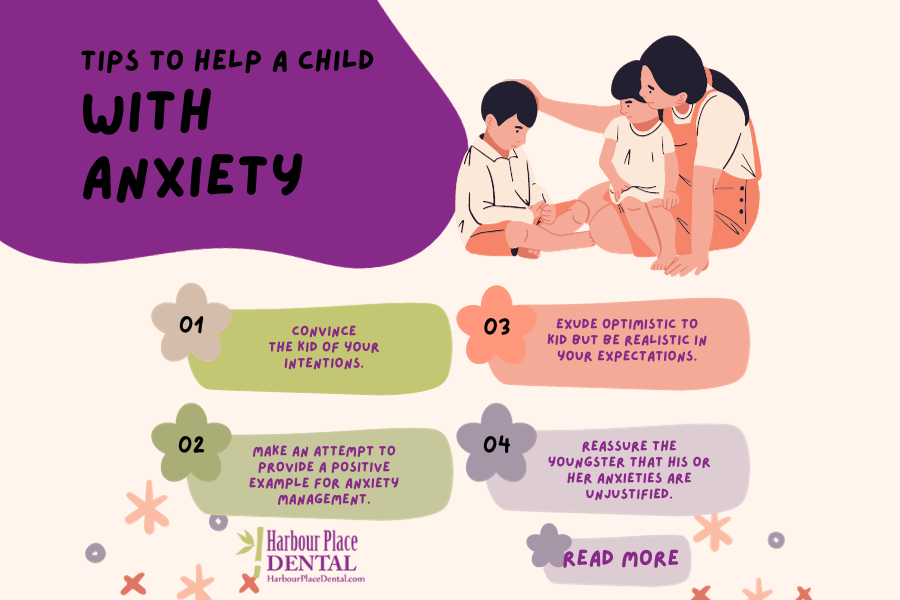
15 expert tips for helping your child conquer dental fear and ensure a positive, lifelong relationship with dental care.
Dental Anxiety: Tips for a Positive Dental Experience

Many parents have faced the daunting task of dealing with their child’s fear of the dentist. Dental anxiety is common among kids, but addressing it early is crucial for their long-term oral health. By following some simple strategies, you can ensure that your child’s dental visits are positive experiences that will help them maintain healthy teeth and gums throughout their lives.

1. Start Early:
One of the most effective ways to prevent dental fear is to start early. As soon as your child’s first tooth emerges, or by their first birthday, schedule their first dental appointment. Early exposure can help normalize the experience and prevent fear from developing.

2. Choose a Pediatric Dentist:
Opt for a pediatric dentist who specializes in working with children. These professionals are trained to address kids’ unique needs and know how to create a child-friendly environment that helps put your child at ease.

3. Pre-Visit Preparation:
Before the dental appointment, talk to your child about what to expect. Use positive language and avoid scary or threatening terms. You can also read age-appropriate books or watch videos about visiting the dentist to help them understand the process.

4. Role Play:
Pretend to play dentist at home with your child. Let them take on the role of the dentist and the patient. This can help them understand what to expect during their real dental appointment.

5. Visit the Office in Advance:
Arrange a pre-visit to the dental office so your child can explore the surroundings, meet the staff, and see the equipment without the pressure of a scheduled appointment. Familiarity can ease their anxiety.

6. Choose the Right Time:
Schedule dental appointments at times when your child is well-rested and less likely to be irritable or anxious. A tired child may find the experience more challenging.

7. Offer Rewards:
Create a reward system where your child receives a small treat or a special outing after a successful dental visit. This positive reinforcement can help make the experience more enjoyable.

8. Stay Calm:
Children often pick up on their parents’ emotions. Stay calm and positive when discussing or attending dental appointments. Your attitude can greatly influence how your child perceives the situation.

9. Distraction Techniques:
Bring your child’s favorite toy or book to the dental visit. These familiar items can help distract your child and make the experience more enjoyable.

10. Praise and Encouragement:
Praise your child for their bravery during and after the visit. Encourage them to share their feelings and experiences. Positive reinforcement can go a long way in helping them overcome their fear.

11. Gradual Exposure:
If your child is extremely fearful, consider starting with shorter, non-invasive appointments and gradually progressing to more complex procedures. This incremental approach can help build their confidence over time.

12. Dental Playdate:
Organize a playdate with a friend who has a positive dental experience. When your child sees that their peer can visit the dentist without fear, it can help normalize the idea of dental visits for them.

13. Sedation Options:
Discuss sedation options or nitrous oxide with the dentist in cases of extreme dental anxiety. These can help ease your child’s stress during treatment while ensuring their oral health.

14. Be a Good Example:
Show your child that you visit the dentist regularly and have positive experiences. Lead by example to reinforce the importance of dental care.

15. Be Patient:
Remember that overcoming dental fear may take time. Be patient and continue to work with your child to help them overcome their anxiety gradually.

Every child is unique, and what works for one may not work for another. The key is to create a supportive and understanding environment while working with dental professionals to ensure a positive and stress-free dental experience for your child. By implementing these strategies, you can help your child develop a healthy attitude toward dental care and ensure a lifetime of happy, healthy smiles.

Filed Under: Blog, Pediatric Dentistry Tagged With: Denatal Anxiety in Children, Dental Anxiety, dentist Mukilteo WA, Mukilteo Dentist, Mukilteo family dentistry

Mini Dental Implants: A Compact Solution for Denture Stability and Tooth Replacement

September 8, 2023 By HarbourPLaceDental

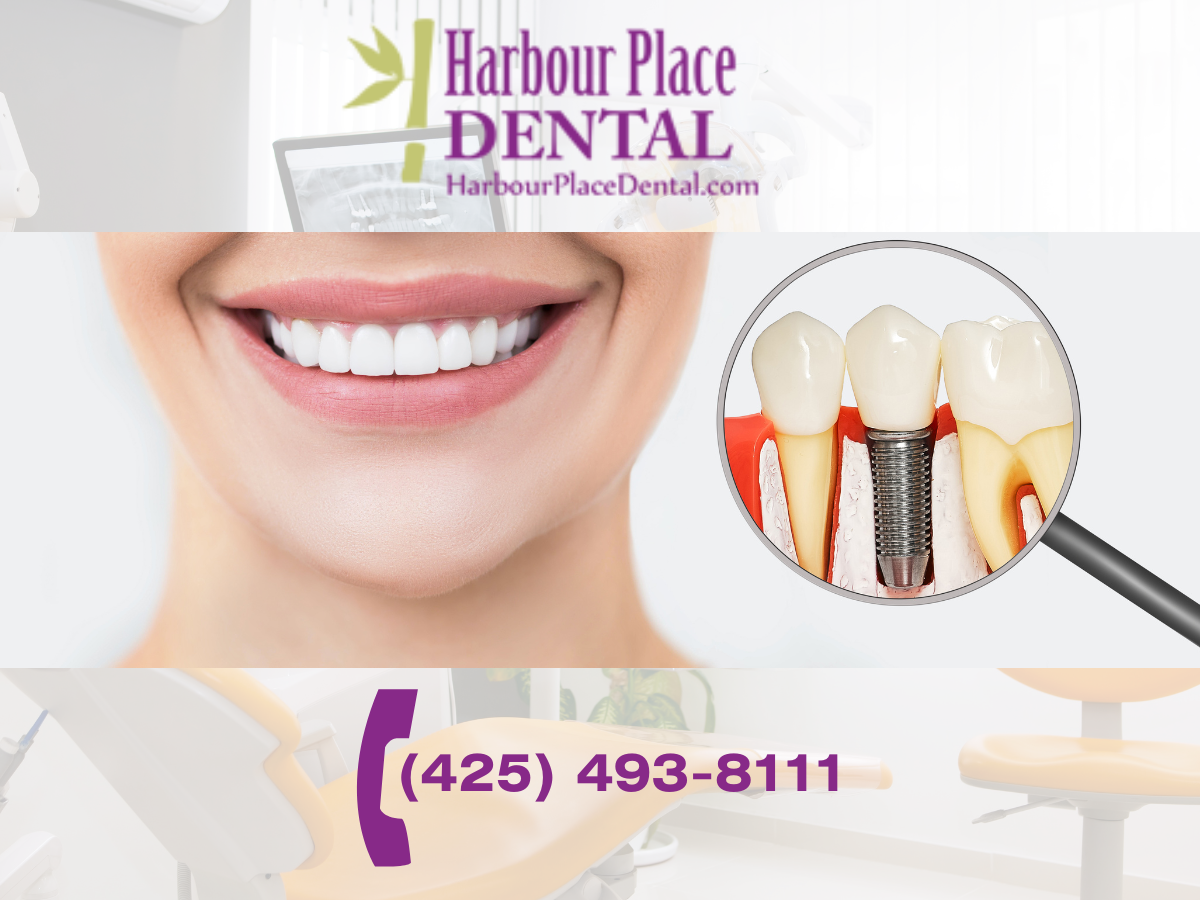
Mini Dental Implants: A Compact Solution for Denture Stability and Tooth Replacement

Introduction: In modern dentistry, technological advancements continue revolutionizing how we address dental health concerns. One such innovation that has recently gained popularity is mini dental implants. These petite powerhouses offer a compact yet effective solution for stabilizing dentures and addressing tooth loss in situations where traditional implants might not be suitable. In this blog post, we’ll explore the world of mini dental implants, their applications, benefits, and considerations.

Understanding Mini Dental Implants: Mini dental implants, as the name suggests, are smaller-sized dental implants designed to address specific dental challenges. While standard dental implants have been the go-to option for tooth replacement and denture stability, mini implants have carved out their own niche due to their unique characteristics. They typically have a diameter ranging from 1.8 to 3.3 mm, making them notably slimmer than their traditional counterparts.

Applications and Benefits:

  1. Denture Stabilization: One of the primary applications of mini dental implants is to provide enhanced stability for dentures. Individuals who struggle with ill-fitting dentures that slip or move while speaking or eating can benefit from mini implants. These implants anchor the dentures securely, restoring confidence and comfort to those who wear them.
  2. Bone Density Challenges: In cases where a patient’s bone density is not ideal for standard implants, mini dental implants offer a potential solution. Their smaller size allows for placement in areas with limited bone volume, opening up possibilities for tooth replacement where it might not have been feasible before.
  3. Reduced Invasiveness: The placement procedure for mini dental implants is generally less invasive than traditional implants. The smaller size often means a simpler surgical technique, reduced discomfort, and quicker healing times.
  4. Affordability: Mini dental implants are often more budget-friendly than their larger counterparts. This cost differential can make dental implant treatment more accessible to a broader range of patients.

Considerations and Limitations: While mini dental implants offer a range of benefits, it’s important to acknowledge their limitations as well:

  1. Durability: Mini dental implants may not provide the same long-term stability as traditional implants, particularly in high chewing forces or single-tooth replacements. A thorough assessment by a dental professional is crucial to determine the most suitable option.
  2. Patient Suitability: The decision to opt for mini dental implants should be made in consultation with a qualified dentist or oral surgeon. Oral health, bone density, and specific dental needs will influence whether mini implants are the right choice.

Conclusion: Mini dental implants have emerged as a valuable tool in modern dentistry, offering a compact yet effective solution for denture stabilization and tooth replacement. With their reduced invasiveness, versatility, and affordability, mini dental implants have helped bridge the gap for individuals facing unique dental challenges. As technology continues to evolve, these mini marvels remind us that even the smallest innovations can significantly improve dental health and overall well-being. To explore whether mini dental implants are the right choice, consult a dental professional who can provide personalized guidance based on your individual needs.

Filed Under: Blog, Restoration Dentistry Tagged With: cosmetic dentistry, Dental Implants, dentist Mukilteo WA, mini dental implants, Mukilteo Dentist, Mukilteo family dentistry, Mukilteo WA Dentist

Bone Grafting in Dentistry: A Simple Guide for Improved Dental Health-Part 6

July 5, 2023 By HarbourPLaceDental

Frequently Asked Questions (FAQs) About Dental Bone Grafting.

In this 6th and final part of the series, we discuss some critical Frequently Asked Questions ( Part 1: What is bone grafting, and how it works; Part 2: Who needs bone grafting in dentistry? Part 3. Different types of bone grafting materials; Part 4. Procedure for bone grafting; Part 5. Post-operative Care and Recovery ). 

Bone Grafting in Dentistry: A Simple Guide for Improved Dental Health-Part 6-Frequently Asked Questions (FAQs)

Bone grafting is a standard procedure in dentistry that can have significant benefits for those who need it. Here are the answers to some of the most frequently asked questions about bone grafting:
Q: What is bone grafting, and how does it work?
A: Bone grafting is a surgical procedure in which bone material is transplanted from one part of the body, a donor or a synthetic substitute, to another that requires more support. In dentistry, this usually means adding bone material to the jawbone to support the placement of dental implants. With time, the transplanted material fuses with the existing bone, strengthening it and making it more resistant to future bone loss.

Q: Who is a good candidate for dental bone grafting, and what are the benefits?
A: Patients who have lost some of their teeth and, as a result of this loss, have lost some of their jawbone density may be good candidates for bone grafting. The benefits of bone grafting include improved dental health through the restoration of jawbone mass, which can significantly improve the overall quality of life.
Q: What are the different types of dental bone grafting procedures, and how do they differ?
A: There are several types of bone grafting procedures, including autografts (using bone material from the patient’s own body), allografts (using bone material from a donor), and xenografts (using bone material from animals). Some more advanced options include stem cell therapy and growth factors to help regenerate the patient’s bone. These methods have unique advantages and disadvantages, and your dentist will help determine which is best for you.
Q: What should you expect during and after dental bone grafting surgery, and how can you ensure a successful recovery?
A: The dentist will use sedation and local anesthesia to ensure the patient is comfortable during surgery. After the procedure, the patient will be given instructions for post-operative care, including pain control medication, antibiotics for infection prevention, and possibly a special diet. Follow-up appointments will be scheduled to monitor the healing process.
Patients should follow their dentist’s instructions for post-operative care to ensure a successful recovery. Some of the most important things to do include keeping the surgical site clean, avoiding smoking, and avoiding any activity that may cause undue stress to the jawbone. With patience and care, the patient will enjoy the benefits of bone grafting and improved dental health.

In conclusion, bone grafting in dentistry is a necessary procedure that can drastically improve your dental health. Whether from a missing tooth or bone loss due to gum disease, bone grafting can restore your jawbone and provide a solid foundation for dental implants or other dental restorations. You can enjoy improved oral health and a more beautiful smile by working with a skilled dental professional and following the proper aftercare instructions. So, don’t hesitate to explore bone grafting options if you are experiencing dental problems – it can make all the difference in your long-term dental health.

Filed Under: Blog, Restoration Dentistry Tagged With: Bone graft dental, bone graft for dental implant, bone grafting dental, Dental Bone Graft, dental bone graft cost, dental bone graft healing stages, Dental Bone Grafting, dental bone grafts, dentist Mukilteo WA, Mukilteo Dentist, Mukilteo family dentistry, what is a dental bone graft

Bone Grafting in Dentistry: A Simple Guide for Improved Dental Health-Part 5

June 14, 2023 By HarbourPLaceDental

Post-operative Care and Recovery

In this 5th part of the series, we discuss the Importance of Post-operative Care and Recovery ( Part 1: What is bone grafting, and how it works; Part 2: Who needs bone grafting in dentistry? Part 3. Different types of bone grafting materials; Part 4. Procedure for bone grafting). 

Bone Grafting in Dentistry Part 5: Post-operative Care and Recovery

Bone grafting and implant surgery are standard procedures that require proper post-operative care to ensure the best possible outcome. Following the instructions provided by your oral surgeon or dental professional is crucial in ensuring successful bone grafting and implantation. Neglecting post-operative care can lead to implant failure, infection, and other complications, potentially leading to costly and painful follow-up procedures.
Tips for a Smooth Recovery

Pain management is a crucial factor in achieving a smooth recovery. Your oral surgeon may prescribe medications, such as painkillers or anti-inflammatory drugs, to relieve discomfort. An ice pack can also help reduce swelling and alleviate pain.
Diet is another essential aspect of the post-operative healing process. They stick to soft and nutritious foods such as yogurt, soup, and smoothies, as they are easier to eat and won’t damage the graft. Avoid crunchy and hard foods such as chips, nuts, or popcorn which may irritate the surgical site.
Proper cleaning and care of the surgical area are also essential. Following the instructions provided by your dental professional will ensure that you keep the surgical site clean and bacteria-free, reducing the risk of infection.
Timeline for Healing and Return to Normal Activities
You may experience discomfort and swelling for a few days after the surgery. Typically in everyday situations, patients return to their regular routines two to three days after the surgery, while others may need to take a few days off to recover. The healing process varies from person to person, with some experiencing faster healing times than others.
As a general rule, the initial stage of recovery takes around two to three weeks, during which the graft will begin to merge with your natural bone. Six to eight weeks after the surgery, the new bone should reach sturdiness and form, making it easier to eat and drink as you did before the procedure.
Follow-Up Care and Maintenance
Regular check-ups and follow-up visits with your dental professional are essential in monitoring the healing process and avoiding possible complications. In addition, maintaining good oral hygiene, brushing, and flossing regularly is vital, and avoiding poor oral health practices such as smoking may affect recovery.
In conclusion, proper post-operative care and strict adherence to the guidelines provided by your dental professional are critical in ensuring successful bone grafting and implantation, resulting in improved dental health and well-being. Remember to consult with a healthcare professional if you have any concerns or queries about your post-operative recovery.

Filed Under: Blog, Restoration Dentistry Tagged With: bone graft for dental implant, bone grafting dental, Bone grafting in dentistry, Dental Bone Graft, dental bone graft cost, dental bone graft healing stages, Dental Bone Grafting, dental bone grafts, Dental Implants, Mukilteo Dentist, Mukilteo family dentistry, what is a dental bone graft

“Bone Grafting in Dentistry: A Simple Guide for Improved Dental Health”-Part 4

June 3, 2023 By HarbourPLaceDental Leave a Comment

The Procedure for Bone Grafting

In this 4th part of the series, we discuss The Procedure of Bone Grafting ( Part 1: What is bone grafting, and how it works; Part 2: Who needs bone grafting in dentistry? Part 3. Different types of bone grafting materials). 

Bone Grafting in Dentistry Part 4: The Procedure of Dental Bone Grafting

Bone grafting is a process of adding new bone tissue to your jawbone, which is sometimes needed in dentistry to improve the retention of dental implants, bolster damaged or weakened bone, or even regenerate bone loss due to certain diseases. In essence, bone grafting can address the skeletal deficiencies that make it difficult or impossible to maintain proper oral hygiene or to receive cosmetic dental treatments.

The importance of bone grafting in dentistry cannot be overstated since it helps create a solid foundation for dental implants and improves dental health outcomes.

When it comes to the materials used in bone grafting, there are different types, including synthetic materials made from calcium minerals, allografts(human donor or human bone), xenografts (animal bone), and autografts (your bone tissue). Depending on your specific needs, your dentist will choose the type of bone grafting material that best suits your case.

The bone grafting procedure for dental implants involves multiple steps, including drilling a hole into the jawbone at the implant site, placing the bone graft material into the hole, covering it with a collagen sponge or membrane, and suturing the gum tissue to protect the implant area. The healing process can take several months before the implant post can be placed securely into the grafted bone.

Proper aftercare is crucial to optimize the success of bone grafting in dentistry. This involves following the post-operative instructions provided by your dentist, which may include avoiding smoking, eating soft foods, taking prescribed medication, and practicing proper oral hygiene. Regular dental check-ups will also ensure that your bone graft is integrating correctly and that the implant process is progressing according to plan.


In conclusion, bone grafting may seem daunting, but it is a common and effective solution for patients struggling with dental problems. With the proper guidance, materials, and post-operative care, bone grafting can create a robust foundation for dental implants, provide stronger teeth, and improve oral health.

Filed Under: Blog, Restoration Dentistry Tagged With: Bone graft dental, bone graft for dental implant, Dental Bone Graft, dental bone graft healing, Dental Bone Grafting, Dental Bone Grafting Material, Dental Bone Grafting Procedure, Dental Implants, dentist Mukilteo WA, Mukilteo Dentist, Mukilteo family dentistry, Restorative Dentistry

Next Page »

Patient Reviews

Kathy Onishi

We are committed to helping you achieve a healthy and beautiful smile in an atmosphere of comfort and caring. Our patients' satisfaction is important to us. Read more here .

FEEDBACK REQUEST

We remain committed to helping you achieve a healthy, beautiful smile in a comfortable, caring environment. We value our patients' satisfaction.   … Please click here to share your feedback. Thanks.

Online Registration

Facebook Google Instagram X

Google Reviews

Harbour Place Dental
Google star 1Google star 2Google star 3Google star 4Google star 5
12 Google reviews
Write a review
Posted on Google Google
Bo LaRue profile picture
Bo LaRue
Google star 1Google star 2Google star 3Google star 4Google star 5Trustindex verifies that the original source of the review is Google.
Did you know tension and anxiety can increase pain. Here, you can set back and relax and let the professionals take care of your dental needs. You’ll be in good hands!

Owner's reply
Thank you for your kind feedback. We appreciate it a lot.
Posted on Google Google
Mikie Madsen profile picture
Mikie Madsen
Google star 1Google star 2Google star 3Google star 4Google star 5Trustindex verifies that the original source of the review is Google.
I haven’t been to dentist in awhile and this was the right place to start again. No judgements and staff is very friendly and helpful. Dr Onishi is a great dentist. She communicates what needs to be done in a very gentle manner. Which brings my stress level down considerably. It doesn’t hurt that her favorite color is purple!! Every time I speak with anyone from the office I always walk away thinking they are so nice. It’s very refreshing. It makes realize that’s not really the norm any longer. But going here gives me hope that it will come back!
Posted on Google Google
Ryan Frans profile picture
Ryan Frans
Google star 1Google star 2Google star 3Google star 4Google star 5Trustindex verifies that the original source of the review is Google.
The doctor and most of the staff are very nice but the scheduling gives inconsistent messages regarding cancellation policy and then sends threatening “you’ll get charged” letters under the guise of being nice and “not charging you this time”. I’d rather find another dentist that has less risk of spurious charges and consistent policies communicated regarding scheduling.
Posted on Google Google
Madelynn Bell profile picture
Madelynn Bell
Google star 1Google star 2Google star 3Google star 4Google star 5Trustindex verifies that the original source of the review is Google.
I love them here. Every time I walk in the door they are so welcoming and treat me so well. I love it!!!

Owner's reply
Thank you very much Madelynn. Appreciate your feedback and kind words.
Posted on Google Google
Lucas Donohue profile picture
Lucas Donohue
Google star 1Google star 2Google star 3Google star 4Google star 5Trustindex verifies that the original source of the review is Google.
Harbor Place Dental provides excellent care and ensures that their patients feel secure and comfortable during their appointment. Dr. Onishi and the hygienists always do a wonderful and thorough job, providing feedback and insight on how to take better care of your teeth. Thank you!

Owner's reply
Thank you Lucas for your kind feedback. We appreciate it very much.
Posted on Google Google
Sarah Bryant profile picture
Sarah Bryant
Google star 1Google star 2Google star 3Google star 4Google star 5Trustindex verifies that the original source of the review is Google.
I have been a patient for many years and there is no one more friendly and knowledgeable than Dr. Onishi and her staff is awesome too. Thanks for all you guys do. Sarah Kelley

Owner's reply
Thank you Sarah.
Posted on Google Google
Caerulean Reeves profile picture
Caerulean Reeves
Google star 1Google star 2Google star 3Google star 4Google star 5Trustindex verifies that the original source of the review is Google.
Amazing staff, I only met Bea and Alicia and of course Dr.Onishi, such lovely people!! I love the environment, also very clean inside. Best dentist establishment I’ve ever been to!!!

Owner's reply
Thank you Caitlyn.
Posted on Google Google
Megan Shangin profile picture
Megan Shangin
Google star 1Google star 2Google star 3Google star 4Google star 5Trustindex verifies that the original source of the review is Google.
Liked the atmosphere! Bea was very friendly and gentle taking my xrays. 👌Xrays can be uncomfortable and painful sometimes so thank you for making that easy!! I was in and out for my second opinion and I'd definitely recommend 😁

Owner's reply
Thank you Megan.
Posted on Google Google
Jill Marie profile picture
Jill Marie
Google star 1Google star 2Google star 3Google star 4Google star 5Trustindex verifies that the original source of the review is Google.


Owner's reply
Thank you Jill for your feedback.
Posted on Google Google
derek lahti profile picture
derek lahti
Google star 1Google star 2Google star 3Google star 4Google star 5Trustindex verifies that the original source of the review is Google.
Love the staff here

Owner's reply
Thank you Derek. Appreciate your feedback. It means a lot to us.
Load more
Verified by Trustindex
Trustindex verified badge is the Universal Symbol of Trust. Only the greatest companies can get the verified badge who has a review score above 4.5, based on customer reviews over the past 12 months. Read more

COMPONEERS

componeer

COMPENEERS VIDEO

Clear Correct 101

Teeth Whitening

Follow Us On Twitter

Dr. Kathy Onishi Follow

HarbourPlDental
harbourpldental

Dr. Kathy Onishi

@harbourpldental ·
6 Oct

Dental Q&A of the Week
Q: Why cold drinks hurt?
A: Sensitivity has several possible causes. Ask your dentist about it.
Book: (425) 493-8111
https://HarbourPlaceDental.com/contact-us
Read more—ADA: https://www.mouthhealthy.org/all-topics-a-z/sensitive-teeth
#SensitiveTeeth

Reply on Twitter 2107377060721438781 Retweet on Twitter 2107377060721438781 Like on Twitter 2107377060721438781 X 2107377060721438781
harbourpldental

Dr. Kathy Onishi

@harbourpldental ·
5 Oct

Happy Sunday from Harbour Place Dental! 🍂 Fall apples boost saliva, but their natural acids mean it's best to rinse with water and wait 30 minutes before brushing your teeth. Protect that enamel! 🍏✨ #HarbourPlaceDental #SundayTip #DentalHealth #EverettWA

Reply on Twitter 2106985043138838732 Retweet on Twitter 2106985043138838732 Like on Twitter 2106985043138838732 X 2106985043138838732
harbourpldental

Dr. Kathy Onishi

@harbourpldental ·
4 Oct

October is National Dental Hygiene Month! 🍂🦷 Fall is the perfect time to reset your oral health routine, protect your enamel against seasonal comfort foods, and book your checkup before the holiday rush. What is your go-to tip for keeping your smile bright? Let us know below!👇

Reply on Twitter 2106641483856244857 Retweet on Twitter 2106641483856244857 Like on Twitter 2106641483856244857 X 2106641483856244857
harbourpldental

Dr. Kathy Onishi

@harbourpldental ·
3 Oct

🎃 Halloween is getting closer! Enjoy the treats, but remember the smiles too.🍬🦷
Drink water after sweets, avoid grazing on candy all day, and brush well before bed.
More Halloween smile tips coming soon!
📞 (425) 493-8111
🌐 https://harbourplacedental.com
#HalloweenSmiles #DentalTips

Reply on Twitter 2106285468132553118 Retweet on Twitter 2106285468132553118 Like on Twitter 2106285468132553118 X 2106285468132553118

Latest Blog Posts

  • Can Adults Straighten Their Teeth? September 24, 2026
  • Common Reasons for a Toothache: What You Need to Know April 22, 2025

Instagram Feed

harbourplacedental

Dr. Onishi, and her experienced and caring team provide a wide range of dental services for restoring your health and beautiful smile!

Happy National Dental Hygiene Month! 🪥✨ Did you k Happy National Dental Hygiene Month! 🪥✨

Did you know that proper oral hygiene is about more than just a bright smile? It’s a key part of your overall health! This October, commit to the Core 4 daily habits:
1️⃣ Brush twice a day for two minutes
2️⃣ Clean between your teeth daily (floss!)
3️⃣ Rinse with mouthwash
4️⃣ Visit Harbour Place Dental regularly for professional cleanings!

Tag a friend who needs a smile reminder this month! 👇💙

Ready for your next cleaning? Tap the link in our bio or call us at (425) 493-8111 to book your appointment. 🌐 Harbour Place Dental

#DentalHygieneMonth #HarbourPlaceDental #MukilteoDentist #SmileBright #DentalCare #HealthyHabits #OralHygienere
Q&A OF THE WEEK 🦷 Why Do My Teeth Hurt When I Drin Q&A OF THE WEEK 🦷
Why Do My Teeth Hurt When I Drink Something Cold?
Ice water. A cold smoothie. One sudden twinge.
What is your tooth trying to tell you?
Cold sensitivity can develop when dentin—the layer beneath a tooth’s protective covering—becomes exposed. Temperature changes can affect its microscopic channels and trigger discomfort.
But the feeling alone cannot identify the cause. Worn enamel, receding gums, cavities, cracks or worn fillings may be involved. Whitening can also cause sensitivity.
YOUR NEXT STEPS
✓ Brush gently with a soft-bristled toothbrush.
✓ Keep brushing twice daily with fluoride toothpaste and cleaning between teeth daily.
✓ Ask whether a sensitivity toothpaste suits your needs.
✓ Call about new, persistent or worsening symptoms.
NOTICE THE PATTERN
One tooth or several?
A quick twinge or lingering pain?
Discomfort only with cold—or also with chewing?
Bring those details to your dental team. They are useful clues, but an examination is needed to understand what is happening.
You do not have to become your own tooth detective. Write down what you noticed and ask for an appointment. Bring the name of your toothpaste and mention recent whitening or dental work so the conversation starts with the right information.
Save this reminder for your next visit. Avoid posting private health details in the comments; contact your practice directly for individual guidance.
BOOK YOUR APPOINTMENT
Call (425) 493-811]
Visit [HarbourPlaceDental.com]
Read more—American Dental Association:
https://www.mouthhealthy.org/all-topics-a-z/sensitive-teeth
#SensitiveTeeth #DentalQA #HealthySmile #OralHealth
Sunday Funday Dental Tip with Harbour Place Dental Sunday Funday Dental Tip with Harbour Place Dental! 🍎🍁

We love a crisp autumn apple, but let’s clear up a common dental myth: biting into an apple stimulates saliva (your mouth's natural defense system!), but it doesn't replace your regular brushing and flossing routine.

💡 Quick Tip: Because apples are mildly acidic, rinse your mouth with water after snacking, and give your enamel a 30-minute break before grabbing your toothbrush.

Drop an apple emoji 🍏 in the comments if you’ve been apple picking this season!

#HarbourPlaceDental #SundaySmileTip #DentalTips #EverettWA #FallVibes #SmileCare #DentalEnamel #OralHealthTips
Fall is in the air, and your routine is getting a Fall is in the air, and your routine is getting a cozy reset—does your smile need one, too? 🍂✨

October is National Dental Hygiene Month! Beyond prepping for Halloween candy, autumn is the ideal season to recommit to the daily habits that keep your teeth strong and healthy all year round.

With kids back in school, schedules stabilizing, and hearty seasonal meals on the table, it’s easy to overlook minor changes in our dental habits. But taking just a few minutes each day to focus on proper brushing, daily flossing, and staying hydrated pays off in a big way.

🗓️ Fall Dental Checklist:
1️⃣ Brush 2x a day for a full 2 minutes
2️⃣ Floss daily (no skipping!)
3️⃣ Drink plenty of water throughout the day
4️⃣ Book your fall cleaning before the holiday rush!

Ready for a bright, healthy autumn smile? Tap the link in our bio or DM us to schedule your visit at Harbour Place Dental! 🦷👇

#NationalDentalHygieneMonth #HarbourPlaceDental #FallDentalCare #HealthySmile #DentalHygiene #EverettDentist #SmileBright #OralHealthTips

(Suggested Visual: A warm, autumn-themed graphic featuring a coffee mug, colorful leaves, a toothbrush, and the text "Fall Into Better Dental Habits: October is National Dental Hygiene Month.")
🎃 Halloween will be here before we know it! A lit 🎃 Halloween will be here before we know it!

A little planning now can help keep Halloween fun from becoming hard on your family’s smiles. Encourage kids to enjoy their treats at designated times, keep water handy, and remember the all-important brushing before bed. 🪥✨

We’ll share more Halloween smile tips as October rolls along.

Healthy smiles. Happy families. 💜

📞 (425) 493-8111
🌐 harbourplacedental.com

#HalloweenSmiles #DentalHealth #FamilyDentist #Mukilteo #HarbourPlaceDental
🦷 DENTAL MYTH VS. FACT ❌ MYTH: “Sports drinks are 🦷 DENTAL MYTH VS. FACT
❌ MYTH: “Sports drinks are harmless for your teeth because they’re made for athletes.”
✅ FACT: Many sports drinks are acidic, and many contain added sugar. Frequent sipping can expose enamel to repeated acid attacks and may increase the risk of erosion and cavities.
That bright bottle may look like part of a healthy workout routine—but your teeth experience the drink differently.
Acids in beverages can soften and gradually wear away enamel. When sugar is present, bacteria in your mouth can also use it to produce acids that contribute to tooth decay. Repeated sipping keeps restarting that exposure.
💧 Protect your smile:
✔ Choose water for routine hydration whenever possible.
✔ Avoid nursing a sports drink over a long period.
✔ Rinse with water afterward.
✔ Don’t brush immediately after an acidic drink.
✔ Brush twice daily with fluoride toothpaste and floss every day.
Sports drinks may be useful in certain prolonged or high-intensity exercise situations, but they aren’t automatically tooth-friendly just because they’re marketed to athletes.
Not sure whether your beverage habits could be contributing to sensitivity or enamel wear? Ask us at your next visit.
📞 (425) 493-8111
🌐 harbourplacedental.com
Source: American Dental Association / MouthHealthy
#DentalMythVsFact #SportsDrinks #EnamelErosion #CavityPrevention #DentalTips #OralHealth #HealthySmile #HarbourPlaceDental #MukilteoDentist
YOUR DENTAL HYGIENIST DOES MORE THAN CLEAN TEETH T YOUR DENTAL HYGIENIST DOES MORE THAN CLEAN TEETH
That smooth, freshly polished feeling is only one part of a hygiene appointment.
Dental hygienists are trained members of the oral-health team. Depending on state law, the practice, and your needs, they may review your health history, assess your teeth and gums, take measurements or images, document findings, and communicate important observations to the dentist.
They also provide preventive services and turn clinical information into practical home-care guidance.
Your hygienist may help you:
✓ Find areas your toothbrush routinely misses
✓ Improve brushing and interdental-cleaning technique
✓ Choose tools for implants, bridges, braces, sensitivity, or limited dexterity
✓ Understand how dry mouth, tobacco, diet, or medications may affect your mouth
✓ Know which changes should be discussed with the dentist
Why does that matter? Most oral care happens at home between appointments. Advice tailored to your mouth can be more useful than a generic checklist.
At your next visit, try asking: “What are you seeing, and what is the one change I should focus on first?”
Your dental hygienist is not simply cleaning your teeth. They assess, document, educate, support prevention, and help you build a home-care routine you can actually maintain.
Book your next preventive visit:
(425) 493-8111
HarbourPlaceDental.com/contact-us
Read more: https://www.ada.org/resources/careers/career-pathways/dental-hygienist
#DentalHygieneMonth #DentalHygienist #PreventiveCare #OralHealth #HealthyHabits #PatientEducation
🦷✨ Your smile tells a bigger story than you think! 🦷✨ Your smile tells a bigger story than you think!

Did you know oral health is a true reflection of your overall health and well-being? According to data from the Harvard T.H. Chan School of Public Health, untreated tooth decay remains one of the most common health conditions worldwide, impacting daily life, comfort, and vitality.

What a healthy mouth needs:
✅ Strong teeth, firm gums, and healthy bone with zero decay or bleeding
✅ Consistent daily brushing and flossing
✅ Balanced nutrition (think calcium-rich foods, fresh produce, and plenty of water!)
✅ Regular professional visits with our team at Harbour Place Dental

Your body and mouth are deeply connected. Taking care of your smile protects your whole-body wellness! 💙

📞 Ready for a check-up? Call us at (425) 493-8111 or visit Harbour Place Dental at  https://harbourplacedental.com/contact-us to book!

#OralHealth #HealthySmile #NutritionAndWellness #PreventiveDentistry #MukilteoDentist #HarbourPlaceDental
Q&A OF THE WEEK 🦷 Q: What is the connection betwee Q&A OF THE WEEK 🦷
Q: What is the connection between diabetes and oral health?
Diabetes can affect more than blood sugar—it can affect your gums, teeth, saliva, and healing too.
When blood glucose is high, the body may have a harder time fighting infection. Higher sugar levels in saliva can also support bacteria involved in cavities and gum disease. People with diabetes are more likely to experience periodontal (gum) disease, dry mouth, oral infections such as thrush, and slower healing.
There is also a two-way connection: gum disease may make blood sugar harder to manage.
A few habits can make a meaningful difference:
🪥 Brush twice a day with fluoride toothpaste.
🧵 Clean between your teeth every day.
🩺 Follow your diabetes-care plan.
🦷 Keep regular dental checkups and cleanings.
💬 Tell your dentist you have diabetes and mention medication or health changes.
Watch for gums that bleed easily, persistent dry mouth, mouth soreness, white patches, or slow healing—and let your dental team know if something changes.
Questions about diabetes and your oral health—or how often you should be seen? We’re happy to help.
📞 (425) 493-8111
🌐 https://harbourplacedental.com/contact-us
Sources: CDC; National Institute of Dental and Craniofacial Research. CDC
#DentalQA #DiabetesAndOralHealth #DiabetesAwareness #GumHealth #HealthySmile #OralHealth #DentalCare #MukilteoDentist #HarbourPlaceDental
SUNDAY DENTAL FUN FACT: PLAQUE AND TARTAR AREN'T T SUNDAY DENTAL FUN FACT: PLAQUE AND TARTAR AREN'T THE SAME THING

Plaque and tartar are related—but they are not the same.

Plaque is the sticky film containing bacteria that continually forms on your teeth. When bacteria in plaque interact with sugars from foods and drinks, they can produce acids that attack enamel. Plaque near the gumline can also contribute to inflammation.

Here is the important difference: plaque can be disrupted with consistent home care. Brushing twice daily with fluoride toothpaste and cleaning between your teeth every day help remove it from the surfaces you can reach.

Tartar, also called calculus, is plaque that has absorbed minerals and hardened. Its rough surface can make teeth harder to keep clean. Once tartar has formed, brushing and flossing will not remove it; it requires professional dental instruments.

Home care and professional cleanings therefore have different—but complementary—jobs. Your daily routine helps control plaque before it hardens. Preventive visits allow your dental team to examine your teeth and gums and remove deposits you cannot remove at home.

If you feel rough buildup near the gumline or notice persistent bleeding, avoid scraping your teeth with household tools. Let a dental professional evaluate it safely.

Where does plaque seem to collect most quickly in your mouth?

CALL US TODAY: (425) 493-8111
VISIT OUR WEBSITE: https://HarbourPlaceDental.com/contact-us

Read more: American Dental Association
https://www.mouthhealthy.org/all-topics-a-z/plaque

#SundayDentalFun #Plaque #Tartar #OralHealth #DentalHygiene #HealthySmiles #HarbourPlaceDental
Pregnant? Don’t automatically put your dental care Pregnant? Don’t automatically put your dental care on hold.

A new national-survey study included 92,130 women, including 2,070 who were pregnant. After adjustment, pregnant participants had 26% higher odds of reporting that needed dental care had gone unmet—even though they reported fewer unmet needs for general medical care.

The finding does not prove pregnancy caused dental problems, and the study did not test whether receiving dental treatment improved pregnancy outcomes. It points to a practical concern: many patients may still think every dental visit or procedure must wait until after delivery.

The American Dental Association says regular and emergency dental care can be provided during pregnancy, including local anesthesia and dental X-rays when clinically needed. Your personal health, medications and treatment needs still matter, so tell your dental team that you are pregnant and keep both your dentist and prenatal-care provider informed.

Pregnancy-related changes can make gums more likely to become inflamed or bleed. Tooth pain, swelling, persistent bleeding or difficulty chewing deserves an assessment—not automatic postponement.

At Harbour Place Dental, we can explain the options, answer questions and coordinate care when appropriate.

Call: (425) 493-8111
Visit: harbourplacedental.com

Research: doi.org/10.1186/s12903-026-10021-1

#PregnancyDentalCare #PrenatalHealth #PregnancyGums #HealthyPregnancy #OralHealth #DentalCare #Mukilteo #HarbourPlaceDental #HealthySmilesHappyFamilies
🍂✨ **FALL FLASH SALE!** ✨🍂 Brighten your smile thi 🍂✨ **FALL FLASH SALE!** ✨🍂
Brighten your smile this season with our **FREE Teeth Whitening Treatment** (an \$80 value)! 🦷💎
Fall is here, the kids are back in school, and it’s the perfect time for YOU to treat yourself. Let your family flash their most confident smiles this season!
📅 **Hurry—Offer ends October 30, 2026**
📞 Call us today at **(425) 493-8111**
🌐 Or contact us now at: http://HarbourPlaceDental.com/contact-us
Don’t miss this chance to refresh your smile—book your appointment today and enjoy a brighter tomorrow! 😁✨
#FallFlashSale #FreeTeethWhitening #HarbourPlaceDental #SmileConfidently #DentalCare See less
Many adults assume that if they did not have brace Many adults assume that if they did not have braces as teenagers, they missed their chance. That is not true. The American Dental Association notes that orthodontists can treat healthy teeth at any age, and the American Association of Orthodontists says age is rarely the deciding factor. Find out the details in this Blog Post:

https://harbourplacedental.com/can-adults-straighten-their-teeth
**WELLNESS WEDNESDAY** **Canker Sore or Cold Sore? **WELLNESS WEDNESDAY**
**Canker Sore or Cold Sore? They’re Not the Same**

That painful spot near your mouth may look familiar—but canker sores and cold sores are different.

**CANKER SORES:**
• Develop inside the mouth
• Often look white or yellow with a red border
• Are not contagious
• May be associated with minor injury, stress, hormonal changes, or nutritional deficiencies

**COLD SORES:**
• Usually appear around the lips
• Often form clusters of fluid-filled blisters
• Are caused by herpes simplex virus type 1 (HSV-1)
• Are contagious

Both can be uncomfortable, and both often improve within about one to two weeks.

While a sore is healing, avoid foods that make it sting—especially very hot, spicy, or acidic foods. If you have a cold sore, avoid kissing or sharing cups, utensils, lip products, or other personal items during an outbreak.

See your dentist or healthcare provider if a sore is severe, keeps returning, interferes with eating or drinking, does not heal as expected, or you are unsure what kind of sore it is.

Knowing the difference can help you care for your mouth, protect the people around you, and know when to seek professional help.

**CALL US TODAY — (425) 493-8111**
**VISIT OUR WEBSITE — HarbourPlaceDental.com/contact-us**

Read more here: NIDCR — Fever Blisters & Canker Sores

#CankerSore #ColdSore #OralHealth #DentalHealth #DentalTips #HarbourPlaceDental
🦷 200 Years of Dental Innovations — Week 23 Imagi 🦷 200 Years of Dental Innovations — Week 23

Imagine going to the dentist before the modern high-speed handpiece existed.

In 1957, Dr. John Borden introduced the Airotor, a high-speed air-driven dental handpiece capable of reaching about 300,000 rotations per minute. The American Dental Association describes it as an immediate commercial success that helped launch a new era of high-speed dentistry.

Why did speed matter?

Earlier rotary instruments worked much more slowly. The air turbine allowed a dental bur to rotate at dramatically higher speed, helping dentists cut and shape tooth structure more efficiently during restorative care.

That innovation became an important ancestor of the high-speed handpieces used in dental offices today. Modern versions have continued to improve through better cooling, smaller turbine heads, lighting, ergonomics and infection-control systems — but the basic air-turbine concept remains familiar.

A device introduced nearly 70 years ago helped change the sound, speed and workflow of modern dentistry.

Dental history is full of innovations like this: tools that once seemed extraordinary and eventually became part of everyday patient care.

📞 (425) 493-8111
🌐 https://harbourplacedental.com

Source: American Dental Association
https://www.ada.org/resources/ada-library/dental-history

#200YearsOfDentalInnovations #DentalHistory #DentalInnovation #Dentistry #OralHealth #HarbourPlaceDental
🦷 DENTAL Q&A OF THE WEEK Can medications cause dr 🦷 DENTAL Q&A OF THE WEEK

Can medications cause dry mouth and cavities?

They can.

Some medications reduce saliva production, causing persistent dry mouth — or xerostomia.

And saliva isn't just there to keep your mouth feeling comfortable. 💧

It helps:

✨ Wash food particles from your teeth and gums
✨ Keep oral tissues moist
✨ Make chewing and swallowing easier
✨ Supply minerals that help protect teeth
✨ Keep harmful germs in check

When your mouth doesn't produce enough saliva, your natural protection against tooth decay is weakened. Persistent dry mouth can increase your risk for cavities, oral infections, mouth irritation, bad breath and difficulty swallowing.

The National Institute of Dental and Craniofacial Research notes that hundreds of medications can cause the salivary glands to make less saliva.

If you've noticed that your mouth became unusually dry after starting or changing a medication, tell your dentist and the healthcare professional who prescribed it.

⚠️ Don't stop or change prescribed medicine on your own.

Your dental team can help identify signs that dry mouth is affecting your teeth and discuss ways to give your mouth some extra protection.

💧 Drink water regularly
🪥 Brush with fluoride toothpaste
🦷 Keep up with dental checkups
🍬 Sugar-free gum may help stimulate saliva for some people

Persistent dry mouth is worth mentioning at your dental visit — especially if you're developing new cavities or sensitivity.

📞 (425) 493-8111
🌐 https://harbourplacedental.com/contact-us

Source: National Institute of Dental and Craniofacial Research
https://www.nidcr.nih.gov/health-info/dry-mouth

#DentalQandA #DryMouth #Xerostomia #CavityPrevention #OralHealth #DentalCare #HarbourPlaceDental #MukilteoDentist #HealthySmiles
🦷✨ SUNDAY DENTAL FUN FACT That small ADA Seal of 🦷✨ SUNDAY DENTAL FUN FACT

That small ADA Seal of Acceptance you may see on oral-care products has been around for more than 90 years!

The American Dental Association established the Seal program in 1931 to help consumers and dental professionals identify oral-care products that meet defined scientific requirements.

So what does a product have to do to earn it?

🔬 Products submitted to the program must provide scientific evidence supporting their safety and effectiveness for the specific claims being evaluated.

That may involve laboratory or clinical testing and review of the evidence through the ADA's scientific evaluation process.

But there's an important detail many people don't realize:

👉 The ADA Seal doesn't mean that every product without the Seal is ineffective—or that a product carrying the Seal is automatically better than every alternative.

Companies choose whether to participate in the program.

Think of the Seal as one useful evidence-based clue when you're standing in front of a shelf filled with toothpastes, toothbrushes, rinses, flosses and other home-care products.

And the product that works well for one person may not be the best choice for another.

Sensitive teeth?
High cavity risk?
Bleeding gums?
Dry mouth?
Braces or dental restorations?

Those differences can matter.

💬 Have you ever checked for the ADA Seal before buying an oral-care product?

If you're unsure what to use at home, ask the Harbour Place Dental team which products may suit your individual oral-health needs.

📞 (425) 493-8111
🌐 harbourplacedental.com

Source: American Dental Association
https://www.mouthhealthy.org/ADASeal

#SundayDentalFun #DentalTrivia #ADASeal #OralCare #HealthySmile #DentalEducation #HarbourPlaceDental #MukilteoWA
🦷 FRIDAY DENTAL TIP: KEEP YOUR DENTAL APPLIANCE CL 🦷 FRIDAY DENTAL TIP: KEEP YOUR DENTAL APPLIANCE CLEAN!

Your toothbrush isn't the only thing that needs a cleaning routine.

Retainers, clear aligners and night guards spend hours in contact with your teeth and saliva, so regular care matters.

Here are a few habits worth remembering:

💧 Rinse after removal.
Don't let saliva and debris simply dry onto your appliance.

🪥 Clean it as directed.
Retainers, aligners and night guards aren't all made the same way. Follow the cleaning instructions for your particular appliance.

🔥 Skip very hot water.
Heat can warp or distort some plastic appliances and change how they fit.

🧴 Use the right cleaner.
Don't assume bleach, strong household cleaners, mouthwash or even toothpaste is appropriate for every appliance. Ask if you're unsure.

📦 Keep the case clean, too.
A clean appliance belongs in a clean storage case.

👀 Watch for wear.
Cracks, rough areas, distortion or a change in fit are reasons to have the appliance checked.

✨ One important reminder: your appliance-care routine works alongside—not instead of—daily brushing and cleaning between your teeth.

Not sure how to clean yours? Bring it to your next visit and we'll help you determine the appropriate care.

📞 (425) 493-8111
🌐 https://www.harbourplacedental.com/contact-us

Healthy smiles. Happy families.

#FridayDentalTip #DentalCare #RetainerCare #ClearAligners #NightGuard #OralHealth #HealthySmile #HarbourPlaceDental #familydentistrygroup
❌ MYTH: Adults can’t straighten their teeth. ✅ FA ❌ MYTH: Adults can’t straighten their teeth.

✅ FACT: Orthodontic treatment isn’t just for kids and teenagers. Healthy teeth can be moved at almost any age.

Many adults assume that if they didn’t get braces when they were younger, they missed their chance. That simply isn’t true.

Today, adults may have several orthodontic options, including traditional braces and clear aligners. The best choice depends on your teeth, bite, gum health, and individual treatment needs.

And straightening teeth isn’t only about appearance. Properly aligned teeth may be easier to brush and floss, while correcting certain bite problems can also improve chewing and help protect your long-term oral health.

The important first step is a professional dental and orthodontic evaluation. Healthy gums and supporting bone are especially important before teeth are moved.

✨ A straighter smile doesn’t have an age limit.

📞 Call Harbour Place Dental: (425) 493-8111
🌐 Visit HarbourPlaceDental.com

#DentalMythVsFact #AdultOrthodontics #StraightTeeth #HealthySmile #MukilteoDentist #HarbourPlaceDental
Rice Grain or Pea Size? How Much Toothpaste Does Y Rice Grain or Pea Size? How Much Toothpaste Does Your Child Need?

Parents often focus on choosing the right toothbrush, helping children brush long enough, and making the routine easier at home. But one small detail matters a lot too: how much fluoride toothpaste should your child actually use?

According to the American Dental Association, children younger than 3 should use only a very small smear of fluoride toothpaste—about the size of a grain of rice. For children ages 3 through 6, the recommended amount is a pea-sized amount of fluoride toothpaste. In both age groups, adult supervision is important so children use the proper amount and learn good brushing habits from the start.

This guidance matters because fluoride helps protect teeth from cavities, but young children still need help brushing safely and effectively. For children ages 3 to 6, parents should also remind them not to swallow the toothpaste. It is also a good reminder that more toothpaste isn't better—the right amount is safe and effective. These early habits can support healthier smiles now and help set the stage for strong oral-health routines as your child grows.

Baby teeth may be temporary, but they play a very important role. They help children chew comfortably, speak clearly, and hold the right space for permanent teeth. Protecting them early can make a real difference.

If you have questions about your child’s brushing routine, Harbour Place Dental is happy to help. We can provide age-appropriate preventive guidance and practical tips for healthy brushing at home.

Source: https://www.mouthhealthy.org/life-stages/babies-and-kids/healthy-habits-babies-and-kids

CALL US TODAY — (425) 493-8111
VISIT OUR WEBSITE — HarbourPlaceDental.com/contact-us

Healthy smiles. Happy families.
Follow on Instagram

Facebook Feed

Harbour Place Dental(opens in a new tab)

Harbour Place Dental

(opens in a new tab)
Harbour Place Dental

16 hours ago

Harbour Place Dental
October is National Dental Hygiene Month! 🦷✨ A healthy smile starts with great daily habits. While brushing is a fantastic start, remember that it only cleans about 60% of your teeth surfaces. Pairing brushing with daily flossing and antiseptic mouthwash is the ultimate routine to keep plaque and cavities at bay.When was your last professional dental cleaning? Let’s team up this month to keep your smile looking and feeling its best! 💙📞 Call us at (425) 493-8111 or visit Harbour Place Dental to schedule your next check-up in Mukilteo, WA!#NationalDentalHygieneMonth #HarbourPlaceDental #MukilteoDentist #OralHealth #HealthySmile #PreventiveCare ...

Photo

View on Facebook (opens in a new tab)
· Share

Share on Facebook (opens in a new tab) Share on Twitter (opens in a new tab) Share on LinkedIn (opens in a new tab) Share by Email (opens in a new tab)

Harbour Place Dental

2 days ago

Harbour Place Dental
Q&A OF THE WEEKWhy Do My Teeth Hurt When I Drink Something Cold?A sip of ice water should be refreshing. If it brings a sharp twinge instead, notice the pattern—and let your dental team know.Cold sensitivity can happen when the protective covering of a tooth is reduced, and the underlying dentin becomes exposed. Dentin contains tiny channels that can transmit temperature changes to the sensitive tissues inside the tooth.But a cold-triggered ache is a symptom, not a diagnosis. Gum recession, worn enamel, a cavity, a crack, or a worn filling may be involved. Whitening products can also cause sensitivity. An examination helps distinguish these possibilities.WHAT CAN YOU DO?• Use a soft-bristled toothbrush and gentle pressure.• Continue brushing twice daily with fluoride toothpaste and cleaning between teeth daily.• Ask your dentist whether a desensitizing toothpaste is appropriate. Relief may require repeated use.• Mention recent whitening or dental treatment when you call.BE READY TO DESCRIBE THE PATTERNIs it one tooth or several? Does the discomfort stop quickly or linger? Does it also happen when you chew? These details help your team understand what has changed and plan your appointment.Call about new, recurring, or worsening sensitivity, especially if pain lingers or interferes with eating. You don't need to figure out the cause before asking for help.Your visit is an opportunity to discuss your toothbrush, toothpaste, and habits as well as the symptom itself. Bring product names or photos if that makes the conversation easier. We create a plan tailored to your teeth—not a guess based on a social post.BOOK YOUR APPOINTMENTCall (425) 493-811]Visit [HarbourPlaceDental.com]Read more from the American Dental Association:www.mouthhealthy.org/all-topics-a-z/sensitive-teeth#SensitiveTeeth #DentalQA #OralHealth #PreventiveDentistry ...

Photo

View on Facebook (opens in a new tab)
· Share

Share on Facebook (opens in a new tab) Share on Twitter (opens in a new tab) Share on LinkedIn (opens in a new tab) Share by Email (opens in a new tab)

Online Registration

Services Hours

Monday 8:30 AM–4:30 PM
Tuesday 8:30 AM–4:30 PM
Wednesday 9 AM–6 PM
Thursday 8.30 AM–3 PM
Friday 8 AM–1 PM
Saturday Closed
Sunday Closed

Excellence Award

Top 10 Dentists in Mukilteo, WA
Voted one of 2015's best Mukilteo, WA practices in Dentistry
Verified by Opencare.com

Legal Disclosures

  • Terms of Use
  • Privacy Policy
  • Disclaimer
  • Medical Disclaimer

Copyright © 2026 · Website powered by Agile Local Marketing & NewGen Marketing Group