The Truth About Orthodontics at Any Age
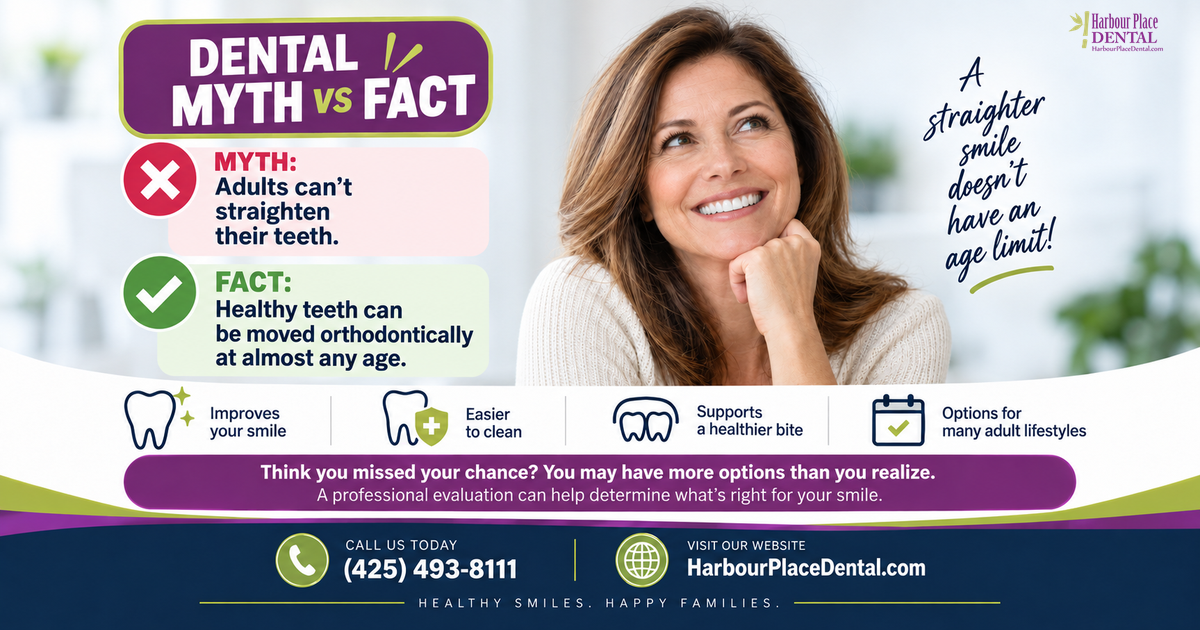
Many people still picture braces as something that belongs to the teenage years. If you did not straighten your teeth when you were younger, it can be easy to assume that the opportunity has passed. That belief is one of the most persistent orthodontic myths.
The reality is much more encouraging: healthy teeth can be moved orthodontically at almost any age. Adults may be candidates for braces, clear braces, professionally supervised clear aligners, or other treatment approaches depending on their individual needs.
The key issue is not simply your age. It is the health of your teeth, gums, supporting bone, and the type of bite or alignment problem that needs to be corrected.
Why Adults Consider Orthodontic Treatment
Adults seek orthodontic care for many reasons. Some want to improve the appearance of a smile that has bothered them for years. Others notice that teeth have shifted with time. Some have crowded teeth that are difficult to keep clean, while others have bite problems that affect chewing or contribute to uneven wear.
Orthodontic treatment is designed to move teeth into better positions and improve the way the upper and lower teeth meet. The American Dental Association notes that orthodontics can be used to correct crowded teeth, spacing problems, protruding teeth, and teeth that do not meet properly.
For adults, that means treatment may provide cosmetic benefits, but the conversation is not only about appearance. Better alignment can sometimes make brushing and flossing easier. Correcting certain bite problems may also help improve chewing and reduce abnormal wear on teeth.
Are Adults Really Too Old for Braces?
No. Age by itself does not automatically prevent orthodontic treatment.
The American Dental Association states that healthy teeth can be treated orthodontically at any age. The American Association of Orthodontists also emphasizes that adults can successfully receive orthodontic treatment and that age is rarely the deciding factor.
That does not mean every adult is automatically a candidate for every type of treatment. Adults often have a more complex dental history than teenagers. They may have crowns, fillings, missing teeth, dental implants, previous gum disease, or areas of bone loss. These factors do not necessarily rule out orthodontic care, but they can affect how treatment should be planned.
That is why the first step should be a careful professional evaluation rather than a do-it-yourself approach or an assumption based only on age.
What Treatment Options Are Available for Adults?
Traditional braces remain an effective option for many adults. Brackets are attached to the teeth and connected by wires that apply controlled pressure to gradually move teeth into new positions.
Some adults may prefer clear or tooth-colored braces that are less noticeable. Others may be candidates for clear aligners. These removable trays are designed to move teeth gradually and can be appealing to people who want a more discreet option.
Clear aligners are not the right choice for every orthodontic problem. The best treatment depends on the diagnosis, the complexity of the tooth movement required, and the health of the teeth and gums. A dentist or orthodontist can determine whether braces, aligners, or another approach is most appropriate.
Why Gum Health Matters
Healthy gums are especially important before orthodontic treatment begins.
Orthodontic appliances move teeth by applying pressure that causes changes in the bone and tissues surrounding the teeth. If significant gum disease is present, moving teeth without first addressing that disease can increase the risk of complications.
The American Association of Orthodontists advises that periodontal health should be evaluated before treatment. Adults with a history of gum disease may still be able to have orthodontic care, but treatment may require coordination between the orthodontist, general dentist, and sometimes a periodontist.
This is another reason professional supervision matters. An attractive smile is important, but treatment should also protect the long-term health of the gums, roots, and supporting bone.
What About Crowns, Fillings, or Missing Teeth?
Many adults have existing dental work, and that does not automatically eliminate orthodontic treatment.
Teeth with crowns can often be moved. Fillings are common and may simply need to be considered during planning. Missing teeth may sometimes create spaces that orthodontic treatment can help manage as part of a broader restorative plan.
In more complex cases, orthodontics may be coordinated with restorative dentistry. For example, teeth may be moved to create the right amount of space before a replacement tooth is placed. Every case is different, which is why an individualized treatment plan is important.
Can Straightening Teeth Improve Oral Hygiene?
It can in some cases.
Crowded or overlapping teeth may create areas that are difficult to reach with a toothbrush or floss. Improving alignment may make those areas easier to clean. That does not mean orthodontic treatment replaces good home care. In fact, brushing and flossing become especially important while wearing braces or aligners.
Patients with braces need to clean carefully around brackets and wires. People using removable aligners need to keep both their teeth and aligners clean and follow instructions about when to remove and replace the trays.
Orthodontic treatment works best when it is paired with consistent preventive care and regular dental visits.
Does Adult Treatment Take Longer?
Treatment time varies from person to person. Age can influence some biological factors, but it is only one part of the picture.
The severity of the alignment problem, the type of movement required, gum and bone health, the appliance being used, and how closely the patient follows instructions can all affect treatment time.
For aligner patients, wearing the trays for the prescribed amount of time is essential. For patients with braces, keeping appointments and following instructions about elastics or other appliances can make a meaningful difference.
Rather than comparing your timeline with someone else’s, it is better to ask what is realistic for your own case.
What Happens After Teeth Are Straightened?
Orthodontic treatment does not end the moment braces come off or the final aligner is completed.
Teeth can shift over time, so retainers are an important part of protecting the result. Your orthodontic provider will recommend a retention plan based on your treatment and risk of relapse.
Wearing a retainer as directed can help maintain the new position of your teeth. Skipping retention can allow teeth to gradually move again, even after successful treatment.
This is true for teenagers and adults alike.
A Straighter Smile Is Not Limited by Age
The myth that adults cannot straighten their teeth can prevent people from even asking about treatment. But modern orthodontic care is not reserved for teenagers.
If your teeth and gums are healthy enough for treatment, there may be several ways to improve alignment. The right option depends on your bite, dental history, goals, and oral health.
For some adults, treatment is mainly about confidence. For others, it may also make daily cleaning easier or improve the way the teeth come together. In either case, the safest starting point is a professional evaluation.
If you have been thinking, “I am too old for braces,” consider replacing that question with a better one:
“What orthodontic options are appropriate for my teeth today?”
That question opens the door to a personalized discussion based on your actual oral health rather than an outdated myth.
Harbour Place Dental can help you evaluate your smile, discuss your concerns, and determine whether an orthodontic consultation may be appropriate.
📞 (425) 493-8111
🌐 HarbourPlaceDental.com